

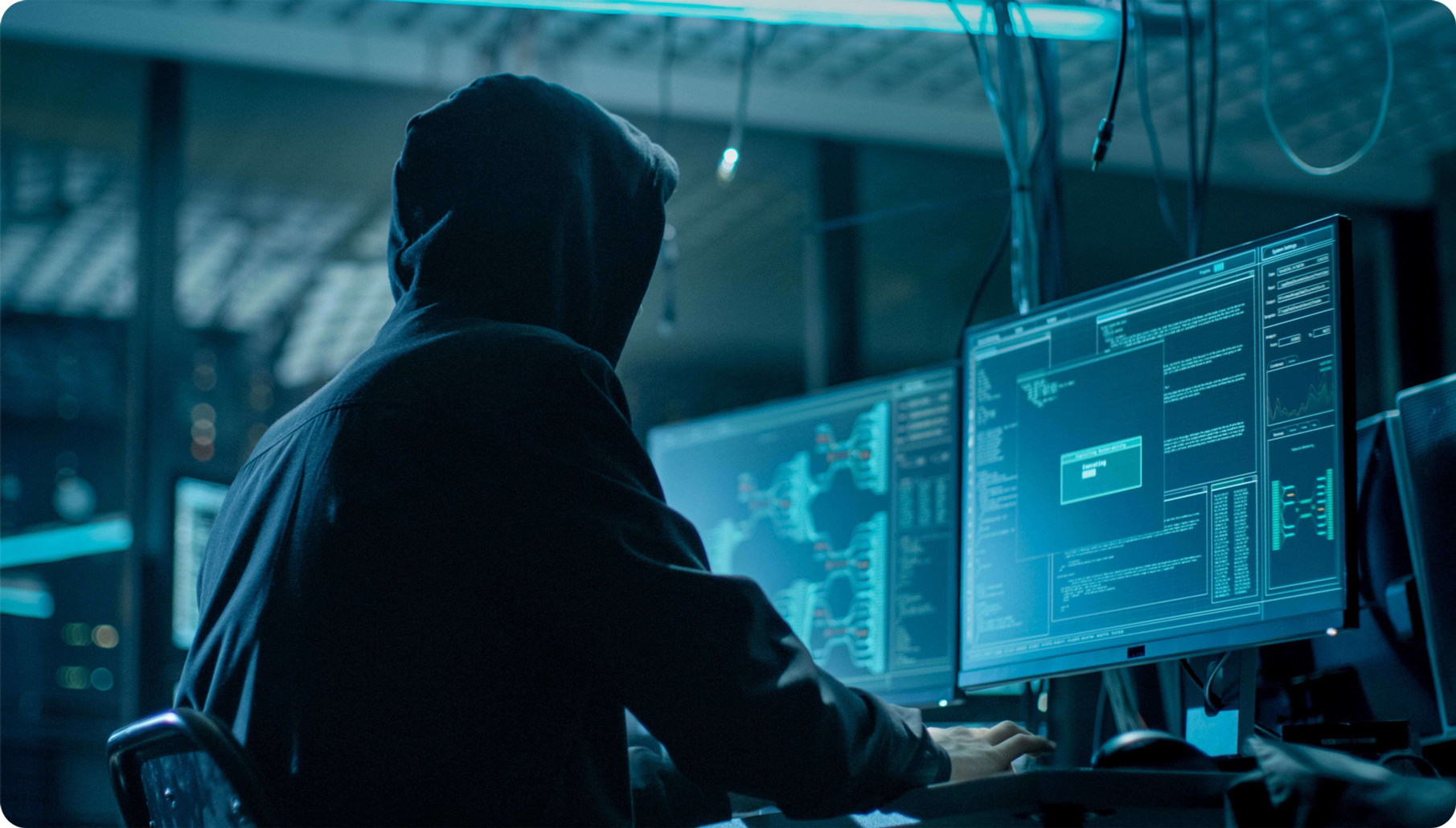
Artificial intelligence has transformed the cyber threat landscape practically overnight. Attackers now wield AI to craft scams and malware that are more convincing, adaptive, and widespread than ever. In fact, 68% of threat analysts report that AI-generated phishing emails are harder to detect in 2025 than in any previous.
From deepfake videos impersonating CEOs to malware that rewrites its own code, the use of AI in cybersecurity by malicious actors is presenting unprecedented challenges. QA professionals and CTOs are finding that traditional defenses – and even QA pipelines themselves – can be outpaced by these AI-fueled attacks.

New Forms of AI-Powered Attacks
Cybercriminals are automating phishing with AI that mimics writing styles and references personal details. Success rates have risen sharply due to personalization and volume. Deepfake videos and audio – nearly indistinguishable from real – are used to impersonate executives and trick teams. Meanwhile, polymorphic malware generated by AI changes constantly to evade detection. Signature-based defenses are losing their effectiveness against these evolving threats.
AI in Reconnaissance and Vulnerability Discovery
AI tools rapidly scan networks, identify vulnerabilities, and mine public data for spear-phishing campaigns. What once took days now takes minutes. AI models like PentestGPT automate penetration testing, stringing together low-severity flaws into viable exploits. Even low-skilled actors can now launch advanced attacks using AI-powered reconnaissance bots.
Attacks on QA Pipelines and CI/CD Systems
The software development lifecycle is now a target. Cybercriminals exploit open-source dependencies by uploading AI-generated malicious packages. In 2025, a compromised GitHub Action affected over 23,000 repositories, exposing secrets from build logs. CI/CD tools, automation scripts, and test environments are now considered prime targets for attackers seeking to inject malware upstream.

AI-Driven Defense and Anomaly Detection
Defenders are using AI for anomaly detection and behavior-based monitoring. ML models flag unusual behaviors that signature tools miss – like irregular login times or abnormal data transfers. AI assists with alert triage, deepfake detection, and proactive threat hunting. By augmenting human analysts, AI reduces time-to-response and limits attacker dwell time.
DevSecOps and Secure QA with CrewSecurity
To mitigate risk, organizations must embed security into every stage of QA. DevSecOps emphasizes early vulnerability detection via static and dependency scanning. Services like TestCrew’s CrewSecurity provide automated scanning, penetration testing, and threat simulations during QA and CI/CD. Securing test environments, managing secrets, and validating components are now essential. The goal: ensure your pipelines don’t become an entry point for AI-enhanced threats.
? TestCrew Insight: “CrewSecurity reduced QA-stage vulnerabilities by 99% for a major client—proving early detection thwarts even advanced attacks.”
AI-driven cyberattacks have reshaped the security landscape. Phishing, deepfakes, and evasive malware are evolving faster than traditional defenses. But AI is also part of the solution—enabling smarter detection, faster response, and resilient pipelines. By adopting DevSecOps and leveraging solutions like CrewSecurity, QA teams and CTOs can stay ahead of the curve and protect systems at every layer.
Don’t let attackers breach your QA pipeline. Explore how CrewSecurity can harden your systems with AI-powered security. Contact TestCrew today for expert help.